
The Story of Villino Rubini
The villa of 1892 and the hill above Como
A Villa Above the Lake
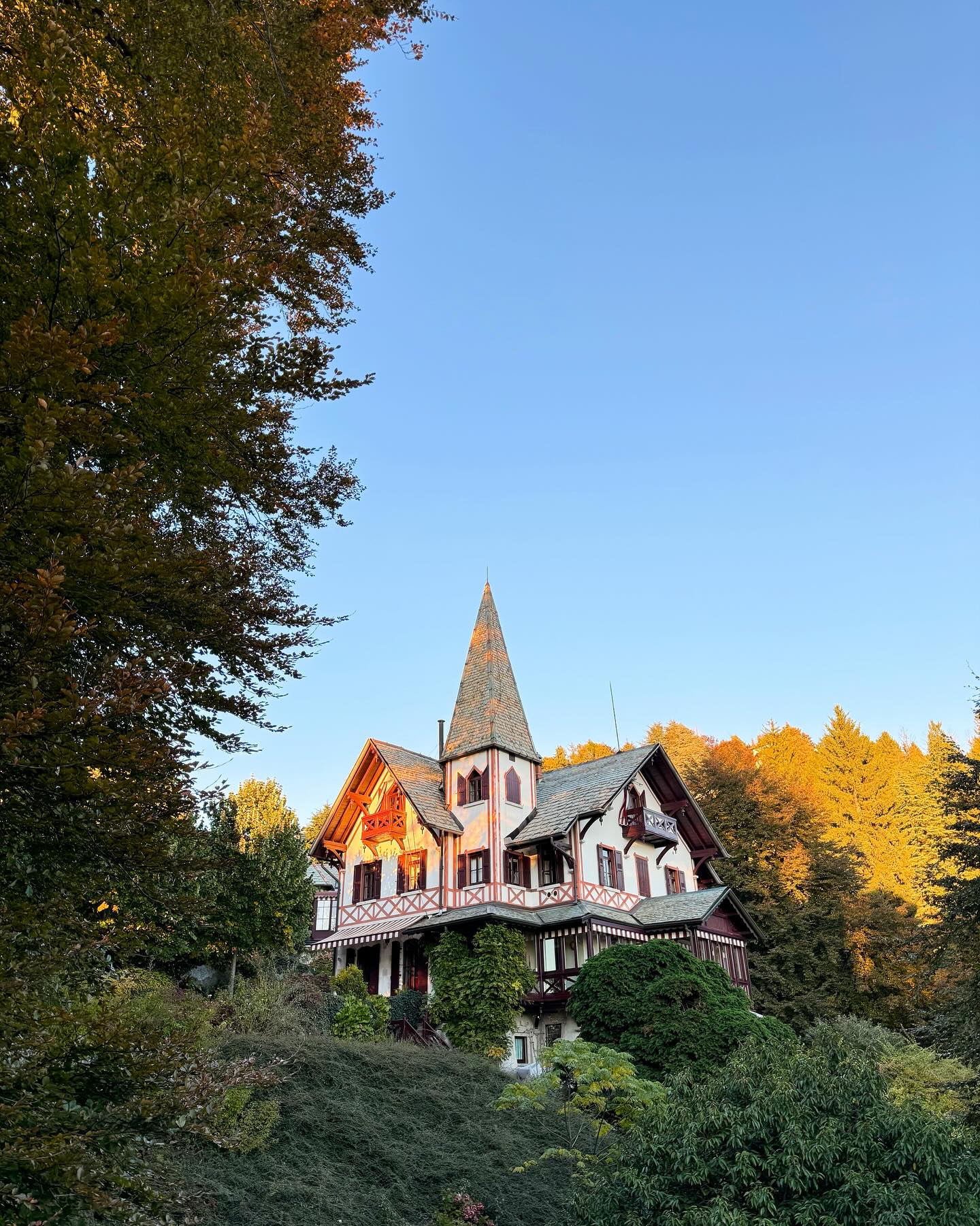
The villa was built in 1892 for the Crespi family and designed by Filippo Rubini, a Como lawyer, and it carries his name. Rubini was one of the enlightened and lively figures of the first leisure city being created in Brunate at the turn of the twentieth century. Wealthy families from Milan and the cities of the Po valley built Brunate in search of an oasis of tranquility and clean air, a refined holiday resort above Lake Como.
The famous Brunate Funicular, inaugurated in 1894, and the opulent Grand Hotel Milano with its casino were built to entertain wealthy vacationers during their evenings. Widely considered one of the very first holiday homes in Brunate, Villino Rubini set the trend that would fill the village with grand residences over the following 2 decades.
Rubini designed the villa in the Nordic chalet style, a blend of eclecticism and Art Nouveau, marking the transition from nineteenth-century romanticism to the floral Liberty style. With its steep pitched roofs and dark wood trim, the villa carries a distinctly English Tudor influence, unlike the Italianate villas down by the lake. The result was a house of quiet distinction, set within roughly 4 acres of beech forest, gardens and parkland.

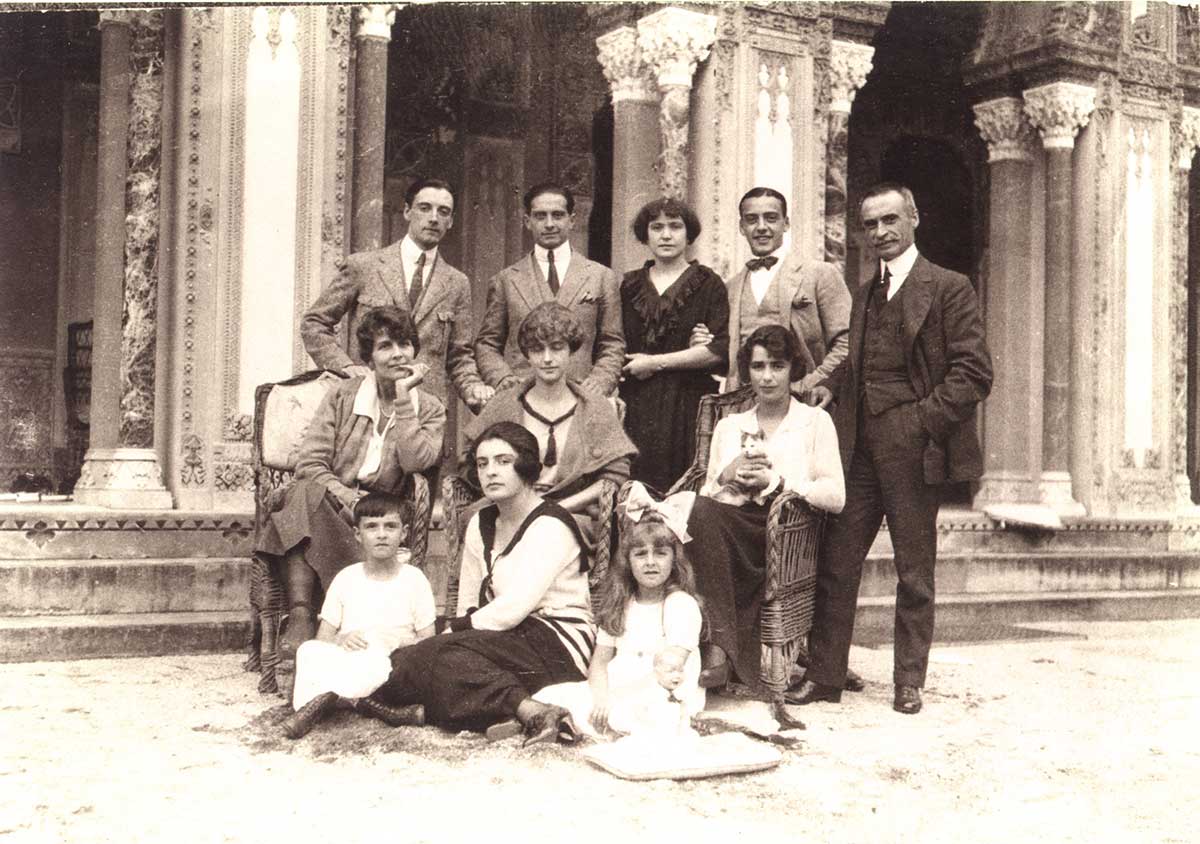 The Crespi family, c. 1900
The villa's story is inseparable from the Crespi family, one of Lombardy's most influential industrial dynasties. The Crespis built their fortune in cotton and textiles, travelling frequently to Manchester to study industrial machinery. They fell in love with the British "Gentleman's Estate" aesthetic and brought those blueprints back to Brunate, building the villa in a distinctly English Tudor style.
As "new money" industrial disruptors, the Crespis chose the highest point possible. They wanted the mountain air, believed to be more enlightened and healthy, rather than the damp lakefront. This started the trend of Brunate becoming the "Upper Class" balcony of Como.
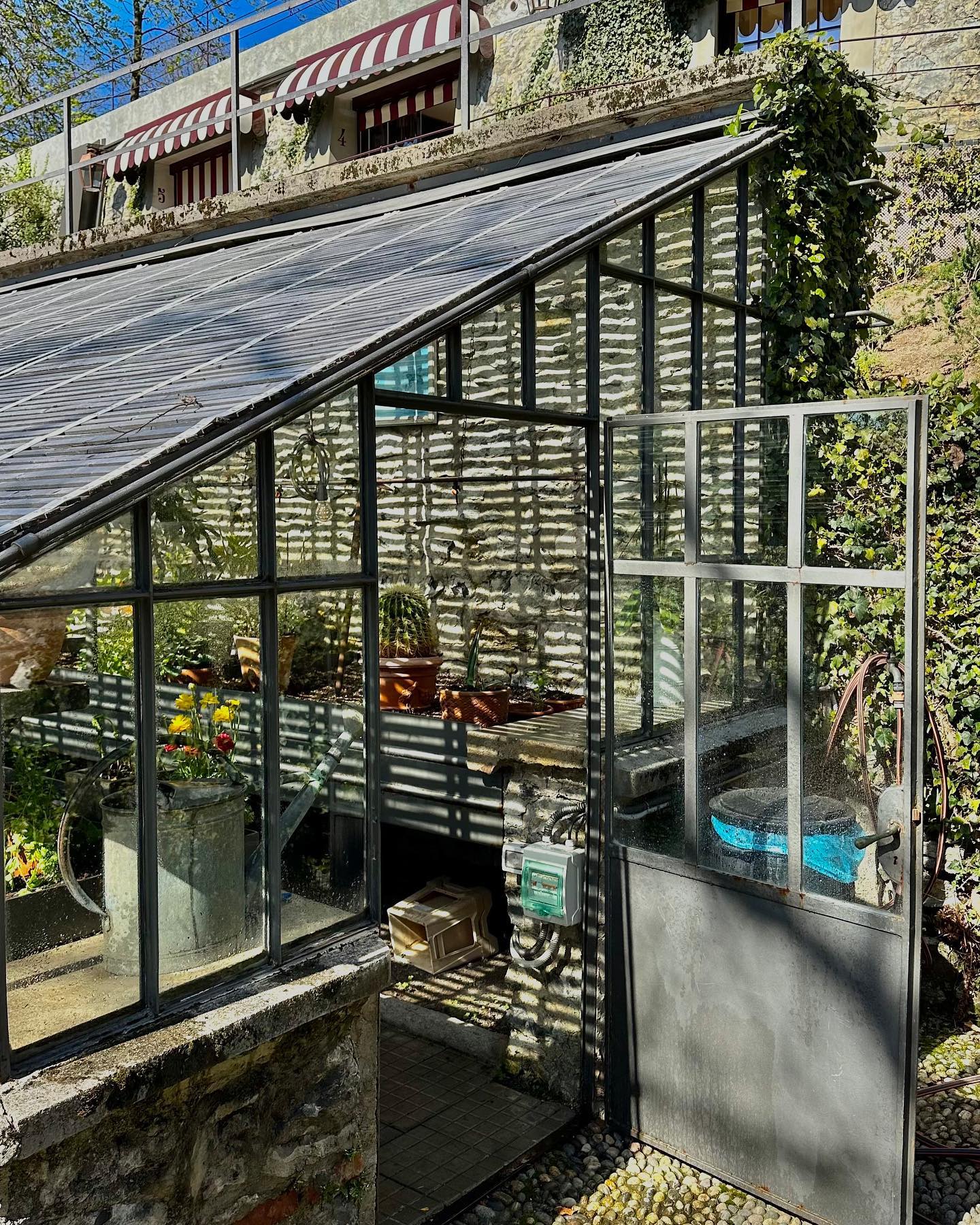
Benigno Crespi, brother of the cotton magnate Cristoforo, became co-owner of the Corriere della Sera, Italy's newspaper of record, a position the family held from 1882 to 1972. Because of this, the villa likely hosted the most influential writers, politicians, and thinkers of the early twentieth century. It was an open secret that decisions impacting the future of Italy were discussed in the "Winter Garden", the villa's glass roofed room.
Near the estate stands the Faro Voltiano, the lighthouse erected in 1927 to honour Alessandro Volta. The estate itself holds roughly 4 acres of beech forest, gardens and parkland, largely unchanged.

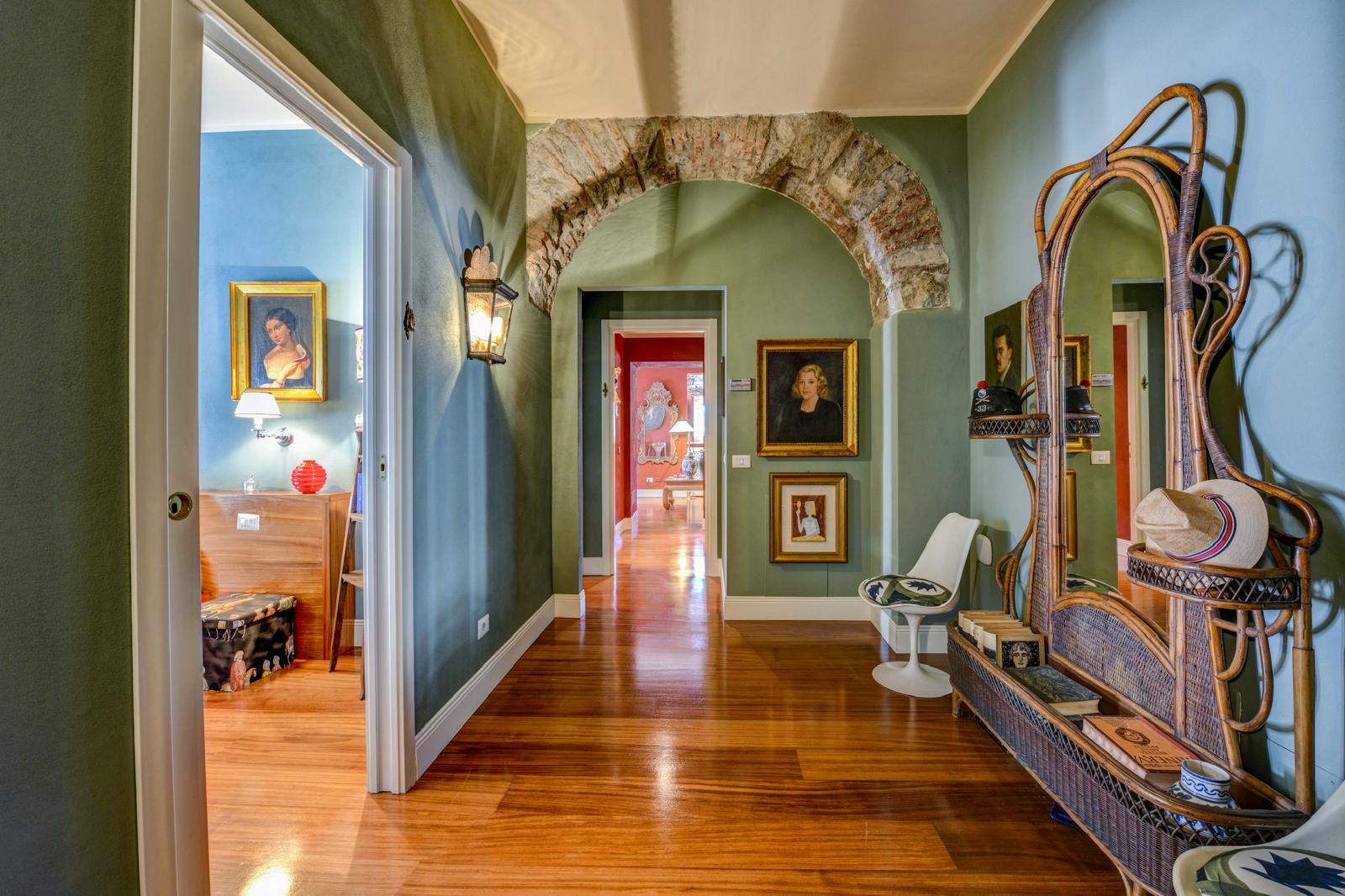
Built in the Nordic chalet style, Villino Rubini represents a blend of eclecticism and Art Nouveau, marking the transition from nineteenth-century romanticism to the floral Liberty style that swept through this part of Italy at the turn of the century. Botanical motifs on the ceilings, ornate cornices around the doorways, original tile and wood flooring throughout. Most of it is original.
A Timeline of Stewardship
Filippo Rubini
The villa was built in 1892 for the Crespi family and designed by Filippo Rubini, a Como lawyer. The Crespis made their fortune in cotton and textiles and travelled often to Manchester, bringing a British 'Gentleman's Estate' aesthetic back to Brunate. As 'new money' industrial disruptors, they chose the highest point for the mountain air. The style is Art Nouveau.
The Crespi Legacy
Benigno Crespi, brother of the cotton magnate Cristoforo, became co-owner of the Corriere della Sera, Italy's newspaper of record. The villa likely hosted the most influential writers, politicians, and thinkers of the early twentieth century. It was an open secret that decisions impacting the future of Italy were discussed in the 'Winter Garden', the villa's glass roofed room.
A Fresh Restoration
The villa has been recently restored, preserving hand-painted ceilings, ornamental plasterwork, and original tile and wood flooring. The grounds, roughly 4 acres of beech forest, gardens and parkland, remain largely unchanged. Villino Rubini welcomes guests for stays, exclusive hire and events, continuing the tradition of gathering that began over a century ago.
Brunate
The Balcony of Lake Como
The village of Brunate sits directly above the city of Como; the estate is above the village, at about 875 metres. Brunate is a small residential village of around 1,800 inhabitants, and it has been a retreat for wealthy Milanese and Lombard families since the late nineteenth century. The Brunate Funicular, inaugurated in 1894, connects the village to Como in 7 minutes, and the estate lies above the village.
The village is surrounded by woodland, with a network of historic footpaths along the ridgelines toward Monte Boletto and the Faro Voltiano lighthouse, built in 1927 to honour Alessandro Volta. Como city centre is about 15 minutes by car.
Lake Como
Lake Como is the deepest lake in Italy and the third largest. Cernobbio lies on the western shore, Varenna on the eastern shore, and Bellagio on the promontory between the 2 branches. The lake is well connected, with Milan Malpensa about 1 hour by car and Milano Centrale reachable in under 40 minutes by train from Como.
